
Toadman005
Does NOT flipping love Orange.
- Messages
- 19,517
- Location
- Daphne, AL
….at what point do we admit either something is wrong, it’s en Vogue, about status, or, collective social grooming is a threat?


….at what point do we admit either something is wrong, it’s en Vogue, about status, or, collective social grooming is a threat?

….at what point do we admit either something is wrong, it’s en Vogue, about status, or, collective social grooming is a threat?
Statistically speaking 99.99% of all humans who have ever lived, have either a penis or a vagina. There are only two genders, and a quick visual check in the mirror will tell you which of the two genders you belong to. Now what you do with your genitalia, or anybody else’s I couldn’t care less about.Or a bullshit statistic...

//There are two genders, and a shitload of mental disorders.\\Statistically speaking 99.99% of all humans who have ever lived, have either a penis or a vagina. There are only two genders, and a quick visual check in the mirror will tell you which of the two genders you belong to. Now what you do with your genitalia, or anybody else’s I couldn’t care less about.
There are two genders, and a shitload of mental disorders.
Sorry it was Newsweek, under Apple+ news.
When I tried to find the article, I did find this however which made me laugh.
However, a poll released today by the Public Religion Research Institute (PRRI) found that 40% of those who cited their primary news source as OANN or Newsmax said they believe in conspiracy theories from Satan worship inside the government to a hidden pedophile ring being run out of government agencies.
When I tried to find the article, I did find this however which made me laugh.
However, a poll released today by the Public Religion Research Institute (PRRI) found that 40% of those who cited their primary news source as OANN or Newsmax said they believe in conspiracy theories from Satan worship inside the government to a hidden pedophile ring being run out of government agencies.
 www.newsweek.com
Nearly 40% Of U.S. Gen Zs, 30% Of Christians Identify as LGBTQ, Poll Shows
The results differed significantly from a February Gallup poll that showed just 5.6 percent of U.S. adults of all ages are not "heterosexual or straight."
Because they didn’t get their ass beat enough, and weren’t taught responsibility and accountability. Nothing is ever their fault, and they don’t understand that decisions have consequences.Why is it when previous generations were able to figure out why life was wo
That looks like it's just one poll from one month. Gallup has a running poll on it over at their site, and it looks ilke it's roughly 15% for that age range, with 11% of that being bi-sexual.Nearly 40 Percent of U.S. Gen Zs, 30 Percent of Young Christians Identify as LGBTQ, Poll Shows
BY PAUL BONDON 10/20/21 AT 10:26 PM EDT
Thirty percent of Millennials identify as LGBTQ, according to a soon-to-be released study that is based on scientific polling data. Among Christians the numbers were lower—but only slightly, with just under 30 percent of Millennial Christians identifying as LGBTQ.
The portion of the population that describes itself as gay has varied over the years, from 10 percent, based on research by Alfred Kinsey and widely promoted by the National Gay Task Force in 1977, to less than 6 percent in a recent Gallup poll. The pollster who worked on the new study, George Barna, attributes the unusually high number he found to social and news media coverage that makes it "safe and cool" for young Americans to identify as LGBTQ—whether or not it represents their actual sexual orientation.
"It's a subset of a larger issue, that this is a generation where three out of four are searching for meaning. This is a group that doesn't have a reason to get out of bed in the morning," Barna says. "Therefore, the LGBTQ identity gives them comfort. A lot of this generation claim to be moving in that direction, but there's a big difference between claiming the identity and living the lifestyle."
The poll looked at so-called Millennials, defined as someone born from 1984-2002, which is about 78 million individuals representing a quarter of the U.S. population.
Among Millennials, 30 percent identify as LGBTQ, more than three times that of the rest of the adult population, and when the researchers broke out the youngest of the group, ages 18-24 (which some call Gen Z), they found 39 percent called themselves LGBTQ.
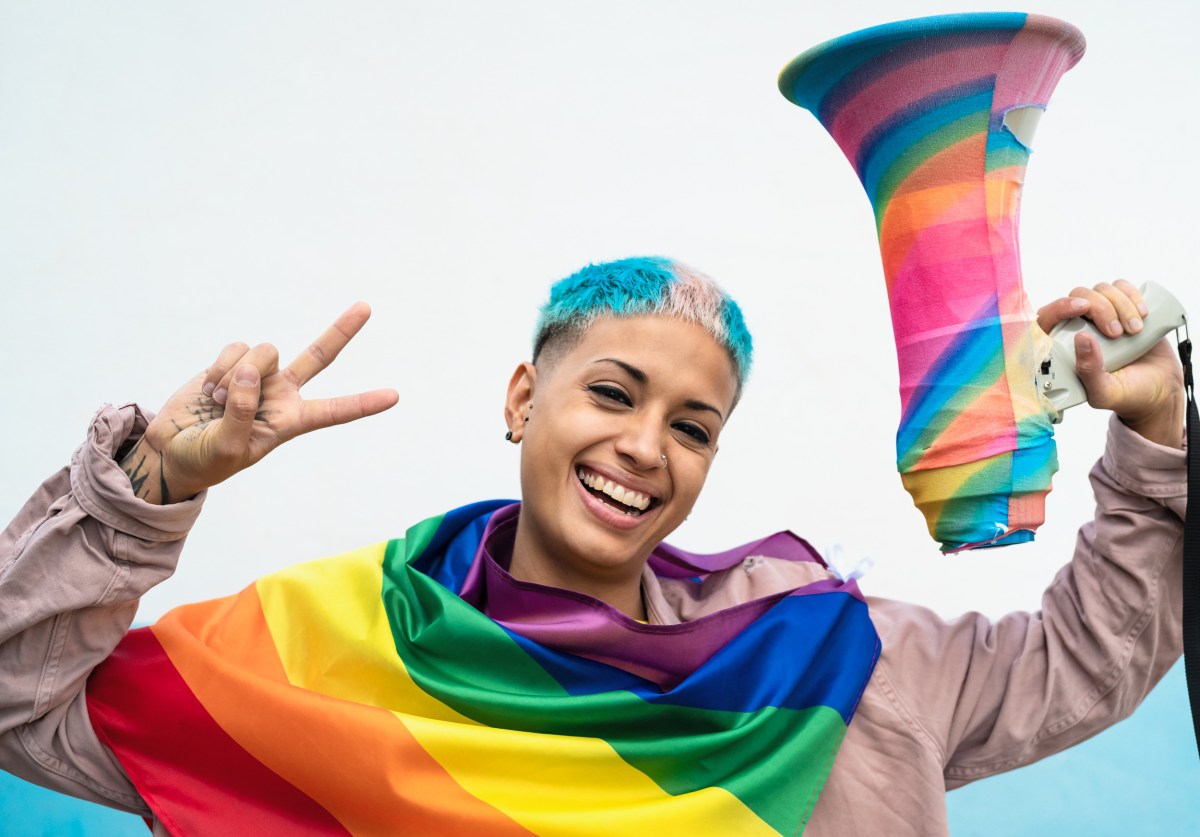
Thirty percent of Millennials identify as LGBTQ, according to a soon-to-be released study that is based on scientific polling data. This stock photo shows a young person wearing a LGBTQ pride flag with hair dyed the colors of the transgender pride flag.ALESSANDRO BIASCIOLI/GETTY
Barna produced the 124-page study in conjunction with the Cultural Research Center at Arizona Christian University and Foundations of Freedom, a non-profit entity that promotes traditional American values.
The results differed significantly from a February Gallup poll that showed just 5.6 percent of U.S. adults of all ages are not "heterosexual or straight," though that poll said that 7.6 percent of respondents refused to answer the question and another 5 percent said they had "no opinion" as to whether they are heterosexual or straight. The Gallup survey concluded that one in six Americans ages 18-23 were gay, lesbian, bisexual or transgender.
Barna's poll is based on a sampling of 600 respondents representing Millennials weighted for factors such as geographic location, race and gender who took an average of 17 minutes each to answer 71 questions.
The poll didn't ask directly whether the respondent was gay or straight, asking instead to choose an answer to the question: "Thinking about your commitments, would you describe yourself as ...."
Six responses were allowed, with the one garnering the most "yes" answers (75 percent) among Millennials being: "Searching for purpose in your life," followed by 74 percent who answered: "Believe all religious faiths are of equal value."
"An American patriot" was next at 55 percent, followed by 54 percent who answered, "Often feel anxious, depressed or unsafe" and 52 percent who answered, "Deeply committed to practicing your faith."
"Prefer socialism to capitalism" was next at 48 percent and "LGBTQ" was last at 30 percent. The order is similar among the 18-24 demographic that has LGBTQ nine percentage points higher.
"It fits into the larger narrative. Millennials are a group that has trouble creating lasting, meaningful relationships," says Barna. "If their sense is that some of the people they want to be friends with — and a group they want to be accepted by — is LGBTQ, then they'll identify with them. It's about image, belonging and acceptance."
Also, a high percent of Millennial Christians (27 percent) and born-again Millennial Christians (28 percent) describe themselves as LGBTQ, even though many faith groups endorse only heterosexual marriage and are sometimes dismissed as homophobic by gay rights advocates.
While the large number of Millennials who identify as LGBTQ is attention-grabbing, Barna says what he found "really interesting is that 40 percent of them fall into the category of what we call the 'don'ts;' they don't believe that God exists, they don't care if God exists. That's the highest we have seen for any generation, ever."
"Why is it when previous generations were able to figure out why life was worth living, this one isn't figuring it out?" he asks. "It has to do with the spiritual changes in America. They don't buy into the Bible, they don't trust God, they don't believe in Jesus, and politics have codified that into law, and the media is a major part of it."
 news.gallup.com
That looks like it's just one poll from one month. Gallup has a running poll on it over at their site, and it looks ilke it's roughly 15% for that age range, with 11% of that being bi-sexual.
LGBT Identification Rises to 5.6% in Latest U.S. Estimate
Gallup finds 5.6% of U.S. adults identifying as lesbian, gay, bisexual or transgender, with the majority of them saying they are bisexual.
Now if even half of that 11% is chicks (which I'm totally cool with), then that leaves like 10% remaining at most. Pretty much on bar with where it's always been. Much ado about nothing.
I mean I guess it's possible that 25% of the women out there just watched hustlers and now want to do threesome's with their husbands and a stripper named Cheyenne. That's just gog doing his work though.Like I said..."or a bullshit statistic."

Homosexual Christian is an oxymoron.Nearly 40 Percent of U.S. Gen Zs, 30 Percent of Young Christians Identify as LGBTQ, Poll Shows
BY PAUL BONDON 10/20/21 AT 10:26 PM EDT
Thirty percent of Millennials identify as LGBTQ, according to a soon-to-be released study that is based on scientific polling data. Among Christians the numbers were lower—but only slightly, with just under 30 percent of Millennial Christians identifying as LGBTQ.
The portion of the population that describes itself as gay has varied over the years, from 10 percent, based on research by Alfred Kinsey and widely promoted by the National Gay Task Force in 1977, to less than 6 percent in a recent Gallup poll. The pollster who worked on the new study, George Barna, attributes the unusually high number he found to social and news media coverage that makes it "safe and cool" for young Americans to identify as LGBTQ—whether or not it represents their actual sexual orientation.
"It's a subset of a larger issue, that this is a generation where three out of four are searching for meaning. This is a group that doesn't have a reason to get out of bed in the morning," Barna says. "Therefore, the LGBTQ identity gives them comfort. A lot of this generation claim to be moving in that direction, but there's a big difference between claiming the identity and living the lifestyle."
The poll looked at so-called Millennials, defined as someone born from 1984-2002, which is about 78 million individuals representing a quarter of the U.S. population.
Among Millennials, 30 percent identify as LGBTQ, more than three times that of the rest of the adult population, and when the researchers broke out the youngest of the group, ages 18-24 (which some call Gen Z), they found 39 percent called themselves LGBTQ.
Thirty percent of Millennials identify as LGBTQ, according to a soon-to-be released study that is based on scientific polling data. This stock photo shows a young person wearing a LGBTQ pride flag with hair dyed the colors of the transgender pride flag.ALESSANDRO BIASCIOLI/GETTY
Barna produced the 124-page study in conjunction with the Cultural Research Center at Arizona Christian University and Foundations of Freedom, a non-profit entity that promotes traditional American values.
The results differed significantly from a February Gallup poll that showed just 5.6 percent of U.S. adults of all ages are not "heterosexual or straight," though that poll said that 7.6 percent of respondents refused to answer the question and another 5 percent said they had "no opinion" as to whether they are heterosexual or straight. The Gallup survey concluded that one in six Americans ages 18-23 were gay, lesbian, bisexual or transgender.
Barna's poll is based on a sampling of 600 respondents representing Millennials weighted for factors such as geographic location, race and gender who took an average of 17 minutes each to answer 71 questions.
The poll didn't ask directly whether the respondent was gay or straight, asking instead to choose an answer to the question: "Thinking about your commitments, would you describe yourself as ...."
Six responses were allowed, with the one garnering the most "yes" answers (75 percent) among Millennials being: "Searching for purpose in your life," followed by 74 percent who answered: "Believe all religious faiths are of equal value."
"An American patriot" was next at 55 percent, followed by 54 percent who answered, "Often feel anxious, depressed or unsafe" and 52 percent who answered, "Deeply committed to practicing your faith."
"Prefer socialism to capitalism" was next at 48 percent and "LGBTQ" was last at 30 percent. The order is similar among the 18-24 demographic that has LGBTQ nine percentage points higher.
"It fits into the larger narrative. Millennials are a group that has trouble creating lasting, meaningful relationships," says Barna. "If their sense is that some of the people they want to be friends with — and a group they want to be accepted by — is LGBTQ, then they'll identify with them. It's about image, belonging and acceptance."
Also, a high percent of Millennial Christians (27 percent) and born-again Millennial Christians (28 percent) describe themselves as LGBTQ, even though many faith groups endorse only heterosexual marriage and are sometimes dismissed as homophobic by gay rights advocates.
While the large number of Millennials who identify as LGBTQ is attention-grabbing, Barna says what he found "really interesting is that 40 percent of them fall into the category of what we call the 'don'ts;' they don't believe that God exists, they don't care if God exists. That's the highest we have seen for any generation, ever."
"Why is it when previous generations were able to figure out why life was worth living, this one isn't figuring it out?" he asks. "It has to do with the spiritual changes in America. They don't buy into the Bible, they don't trust God, they don't believe in Jesus, and politics have codified that into law, and the media is a major part of it."
I mean I guess it's possible that 25% of the women out there just watched hustlers and now want to do threesome's with their husbands and a stripper named Cheyenne. That's just gog doing his work though.
Homosexual Christian is an oxymoron.
Women’s sexuality (and personalities) is more malleable (which is why they’re the most targeted demographic when pushing radical social change). No coincidence the rate of trans girls (boys) has remained constant but trans boys (girls) has skyrocketed.I mean I guess it's possible that 25% of the women out there just watched hustlers and now want to do threesome's with their husbands and a stripper named Cheyenne. That's just gog doing his work though.
Don't hate on chicks who want to do threesomes with other chicks. It's un-american.The alphabet soup group is a favored class, and kids want to be in it. Also, it attracts the power hungry. Be careful, there.
Where did you interpret I said that?Don't hate on chicks who want to do threesomes with other chicks. It's un-american.

You are a Zombie.
When I tried to find the article, I did find this however which made me laugh.
However, a poll released today by the Public Religion Research Institute (PRRI) found that 40% of those who cited their primary news source as OANN or Newsmax said they believe in conspiracy theories from Satan worship inside the government to a hidden pedophile ring being run out of government agencies.