Dayum!! This explains some things....those 'Veritas' banners are hilarious.
The Ivy League is having a mental health crisis. “Forty-seven percent of surveyed seniors indicated that they experienced mental illness at some point in their time at Harvard, and 13 percent said they were unsure,” according to a survey of the Class of 2026 conducted by the Harvard Crimson...

freebeacon.com
Harvard Students Are Twice as Mentally Ill as the General Population Amid Ivy Psychological Meltdown
Young and left-wing are part of 'emerging mental health political identity'
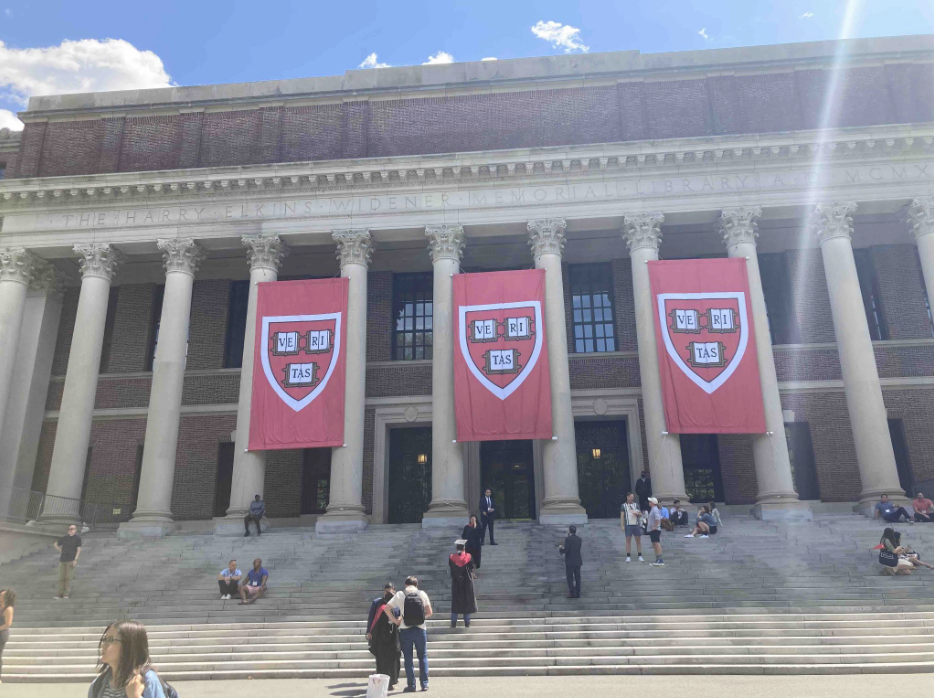
Harvard’s Widener Library is seen in a 2024 file photo. (Photo: Ira Stoll)
Ira Stoll
June 16, 2026
http://www.facebook.com/share.php?u=https://freebeacon.com/campus/harvard-students-are-twice-as-mentally-ill-as-the-general-population-amid-ivy-psychological-meltdown/
https://twitter.com/share?url=https://freebeacon.com/campus/harvard-students-are-twice-as-mentally-ill-as-the-general-population-amid-ivy-psychological-meltdown/&text=Harvard+Students+Are+Twice+as+Mentally+Ill+as+the+General+Population+Amid+Ivy+Psychological+Meltdown
The Ivy League is having a mental health crisis.
"Forty-seven percent of surveyed seniors indicated that they experienced mental illness at some point in their time at Harvard, and 13 percent said they were unsure," according to a
survey of the Class of 2026 conducted by the
Harvard Crimson student newspaper. That’s more than double the rate of the general adult U.S. population, which the federal government’s National Institute of Mental Health
estimates at 23.1 percent, noting that "Mental illnesses include many different conditions that vary in degree of severity, ranging from mild to moderate to severe."
At Princeton, a senior
survey conducted by the
Princetonian student newspaper found 60.1 percent had mental health counseling or therapy during college, with 36.3 percent getting help from the university’s counseling and psychological services and 23.8 percent finding outside assistance. That’s also much higher than the overall population; NPR
reported last year on a study that found "the number of American adults getting outpatient talk therapy grew from 6.5% to 8.5%."
Yale faced a 2022
federal lawsuit for failing to accommodate "students with mental health disabilities." Students and alumni, organized in groups such as Mental Health Justice at Yale, the Yale Law School Mental Health Alliance, and Elis for Rachael, are still advocating; a recent
Yale Daily News opinion piece, published under the headline "
Yalies for mental health," laments the quality of the counseling services on offer at the university, arguing, "many students still wait unacceptably long to see a therapist. For instance, upon returning from summer vacation, students do not automatically continue seeing their therapist from the previous school year. Instead, they must undergo the placement process all over again, unnecessarily lengthening the time it takes to be matched with a therapist. Yale has not met student requests for a more diverse range of therapists. Yale still does not offer an affordable Preferred Provider Organization option for health insurance. And Yale did not agree to implement annual mental health first-aid training for students, faculty, staff and administrators."
Potential causes of the trends are multifarious. As with mild autism and learning disabilities of the sort that generate eligibility for untimed standardized tests, it’s unclear how much of the increase is in incidence and how much is in identification—that is, are today’s students really more depressed, anxious, or panicked than previous generations, or are they and the grownups around them simply more likely to diagnose and label their maladies as mental illness? It could be that both dynamics are operating.
Among the factors are federal legislation—the Mental Health Parity Act of 1996 and the Paul Wellstone and Pete Domenici Mental Health Parity and Addiction Equity Act of 2008—that may have helped make students and parents more aware of eligibility for services. Technological advances have made talk therapy readily available on telehealth platforms, so, ironically, students can visit a mental-health provider online in search of a cure for what
Anxious Generation author Jonathan Haidt calls an "epidemic of teen mental illness" created by the replacement of "play-based childhood" with "phone-based childhood." Popular culture is also a factor: Star performing artists such as
Noah Kahan and
Taylor Swift talk openly about their issues.
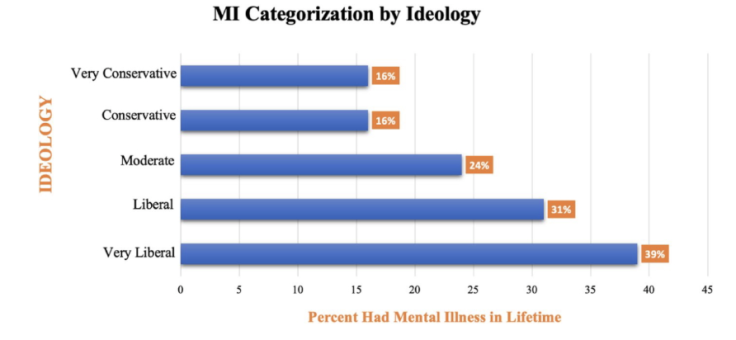
And it may just be that students on overwhelmingly politically liberal Ivy League campuses are more likely to identify as mentally ill than other Americans are. An assistant professor of political science at Utah State University, Lauren Van De Hey, wrote a paper, "
Just a Little Melancholic, Maybe a Little Blue: Mental Health as an Emerging Political Identity," published in April 2026, describing what she called "an emerging mental health political identity that is most pronounced among younger (Gen Z) and more liberal Americans."